JAPANESE
APPOINTMENT
About our Implant Treatment

What is a Dental Implant?

What is an implant

Implants: Your "Second Set of Teeth"

Losing teeth due to decay or periodontal disease has long been a serious concern.
In the past, losing a tooth meant grinding down adjacent healthy teeth for a bridge or getting partial dentures. However, once a tooth is ground down, it becomes weaker and more prone to cavities. Furthermore, teeth that support denture clasps are under constant strain and can eventually break. This cycle of repeated treatments can sometimes lead to the loss of almost all teeth.
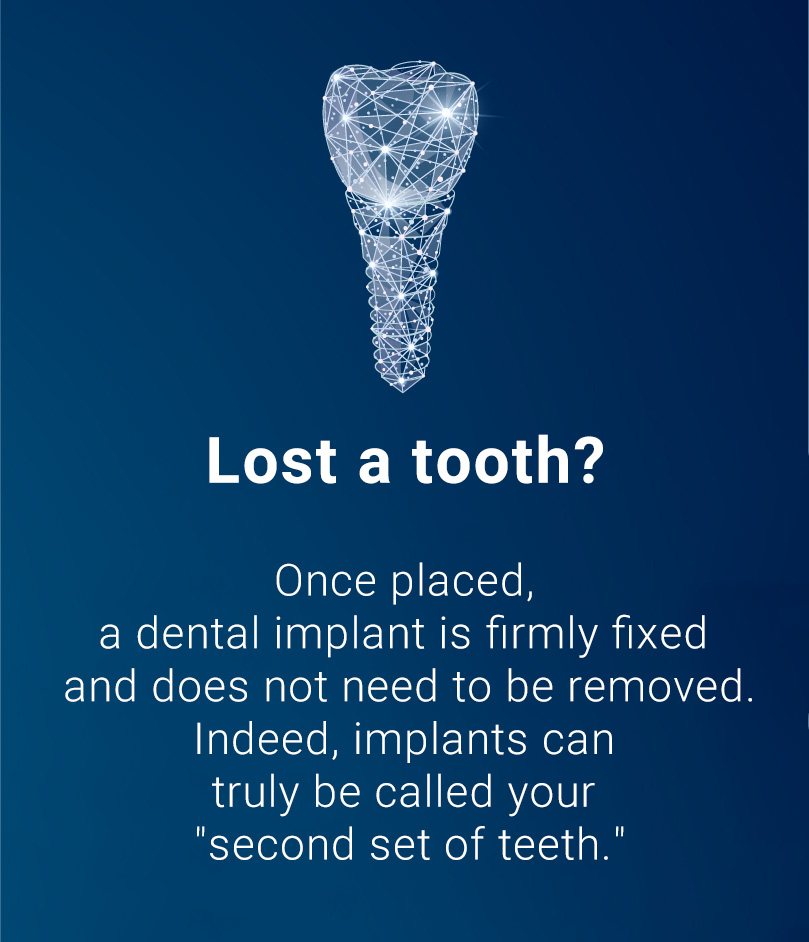
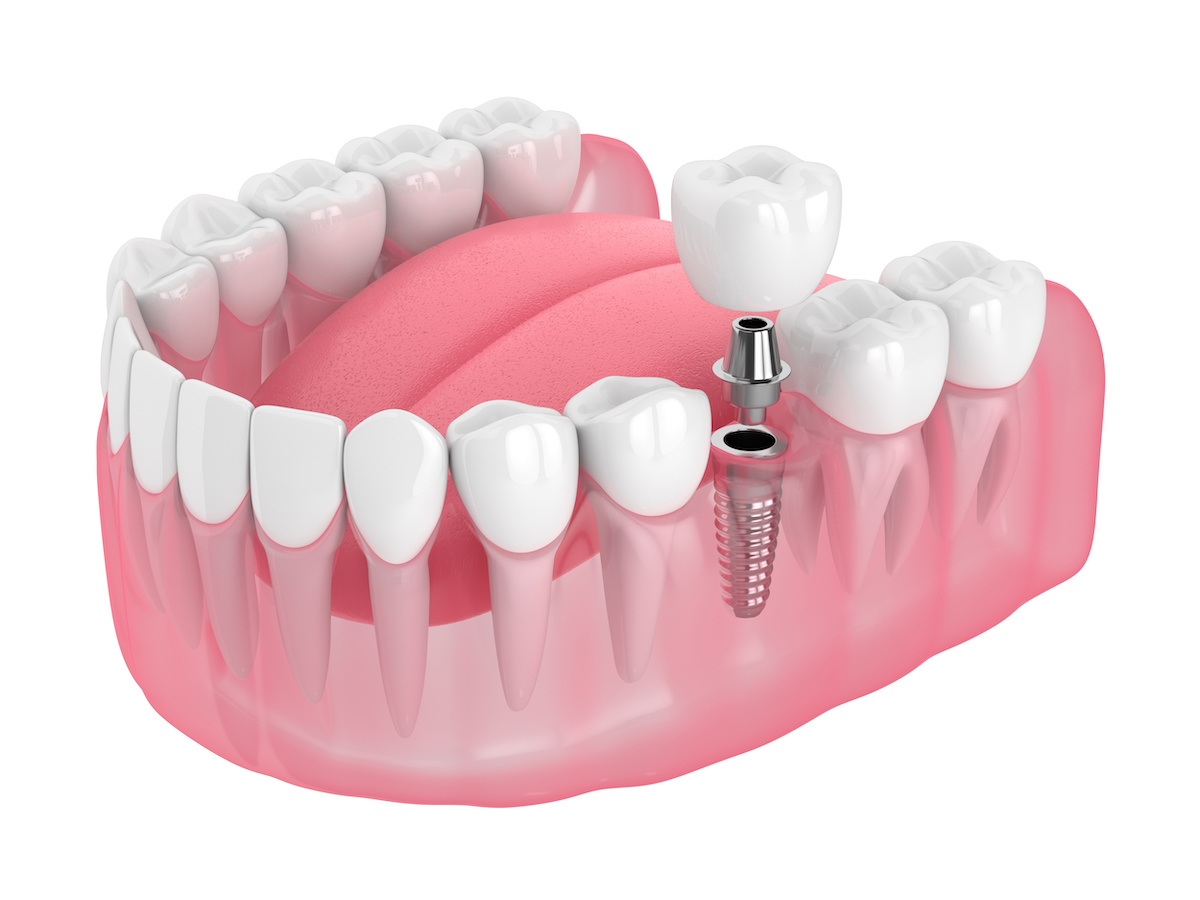
Implants were developed to solve these problems. A dental implant is a method of fixing an artificial root into the area where a tooth was lost. Once placed, an implant is firmly fixed and does not need to be removed.
Indeed, implants can truly be called your "second set of teeth."
Comparison:
Conventional Methods vs. Implants

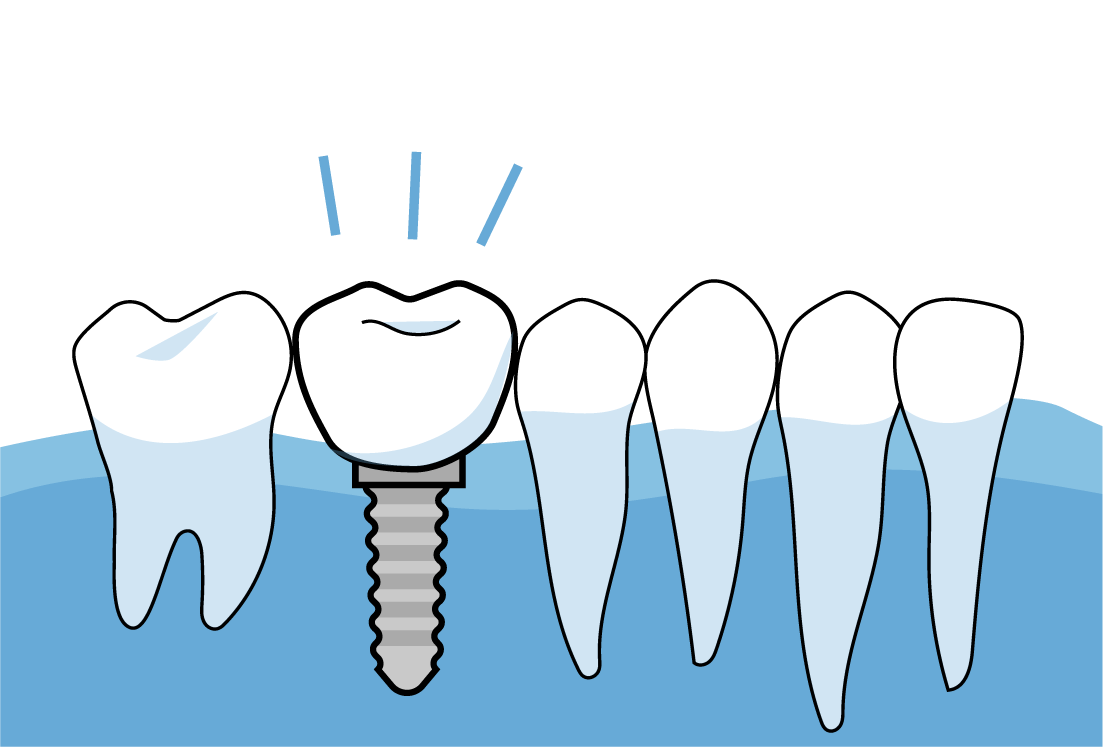
Because an implant can be reconstructed as a single, independent tooth, it does not sacrifice other healthy teeth.

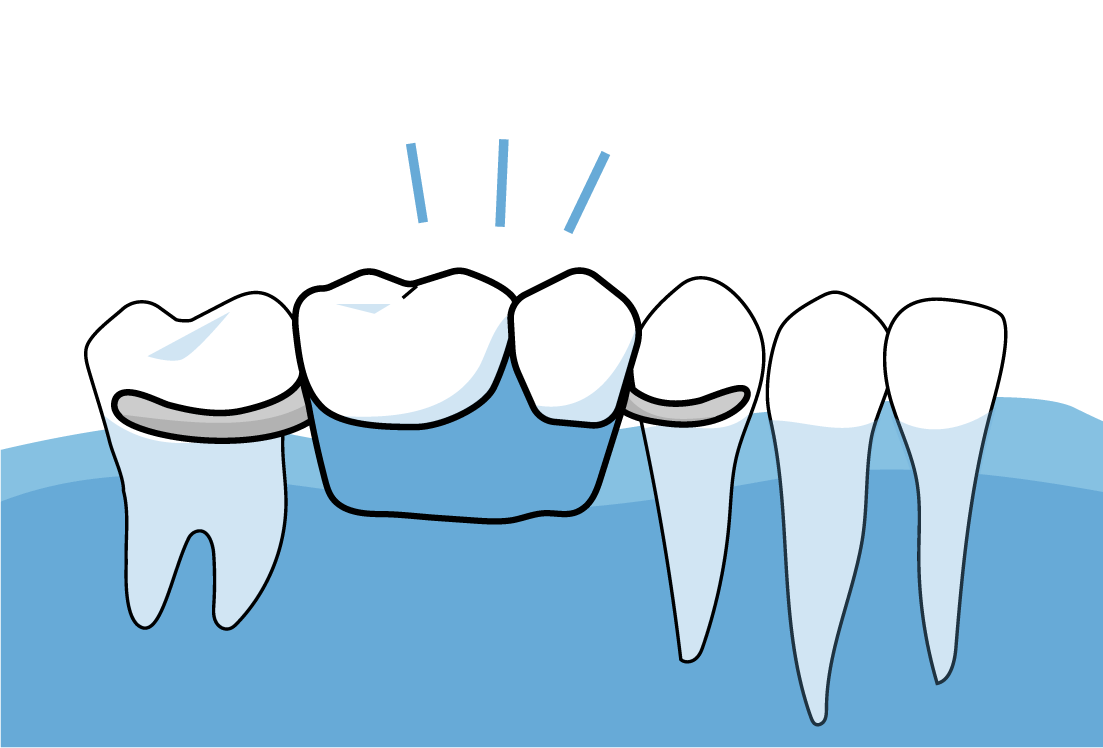
Bridge

Bridge-type dentures

Bridges can often feel unstable when chewing. Because the appliance relies on adjacent teeth for support, those teeth must be ground down, increasing the risk of future decay.

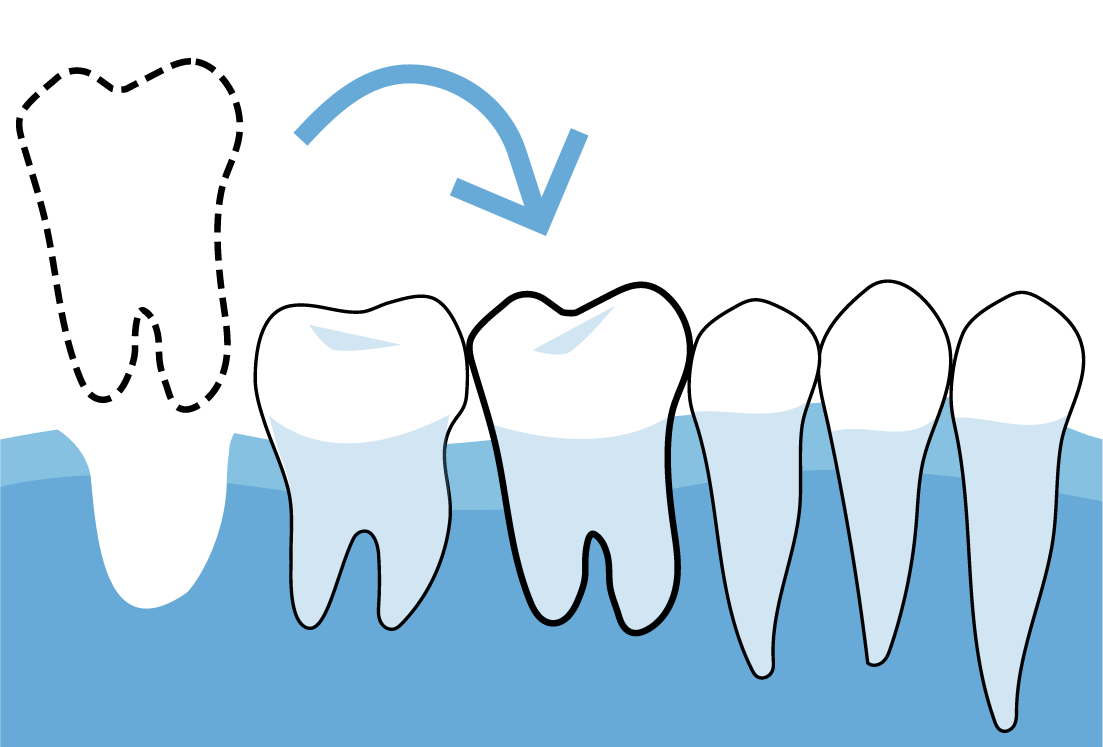
Tooth Transplantation

Tooth transplantation

Transplantation cannot be performed unless you have another suitable tooth to move, such as a healthy wisdom tooth.

Implant

Dental Implant

The dental implant acts as a root and a support pillar, eliminating the need to grind down surrounding healthy teeth.

What does an implant look like?

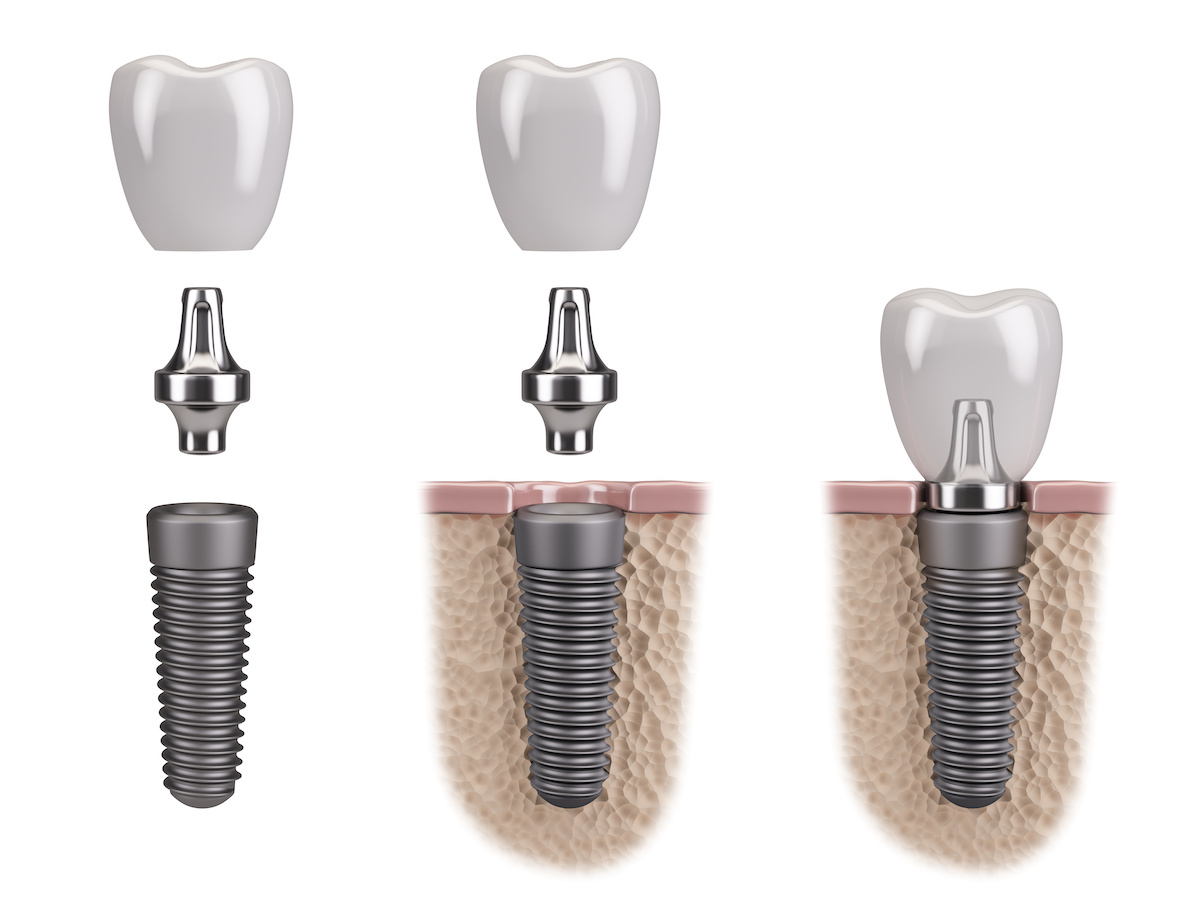
Titanium Screw

An implant is a titanium screw that is biocompatible with the human body. It is placed and fixed into the jawbone.

The Implant Treatment Process

1. Examination & Assessment

We examine the condition of the patient's oral cavity.
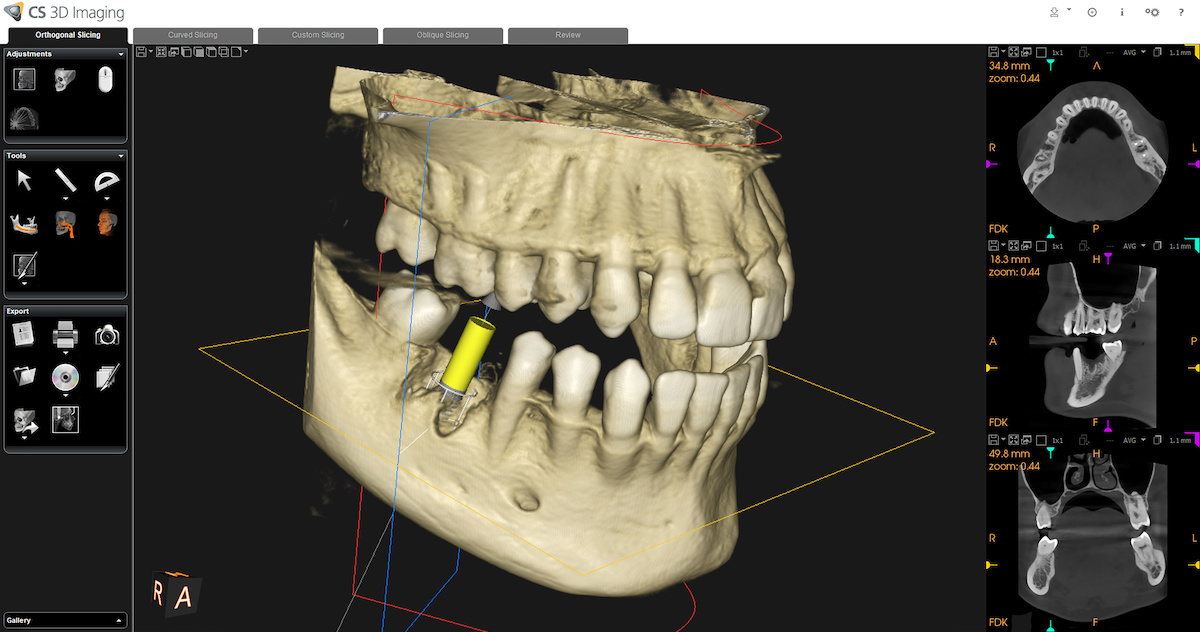
This includes panoramic X-rays, tomographic X-rays, model diagnosis, bone morphology examination, bite analysis, and periodontal check-ups. If the jawbone condition is complex, precise testing using CT scans and computer analysis is performed. Accurate image diagnosis is essential for safe placement in the ideal position without anxiety about the surgery or prognosis.

2. Treatment Planning

The key to planning implant treatment is not just looking at the implant itself, but examining and diagnosing the health of the entire mouth.
To ensure the success and long-term durability of the implant, it is necessary to maintain overall oral health.

3. Counseling

We discuss the final treatment plan with the patient.
The dentist will provide detailed information regarding the implant procedure. Implant treatment only begins once both the patient and the dentist are fully satisfied after thorough counseling.

4. Implant Surgery / Placement

The surgery is performed under local anesthesia. For a single standard implant, the procedure takes about 30 to 45 minutes. No hospitalization is required. Once placed, the implant bonds with the surrounding bone (Osseointegration). This bonding is the most significant feature of implants. By integrating with the bone rather than just being placed in it, the implant achieves exceptional strength.

5. Healing Period / 6 to 12 Weeks

After the healing period, a new restoration (crown) is placed on top of the implant. Restorations can be fixed with either screws or cement; however, cement-retained implants have become the most common method recently.

6. Maintenance

Maintenance

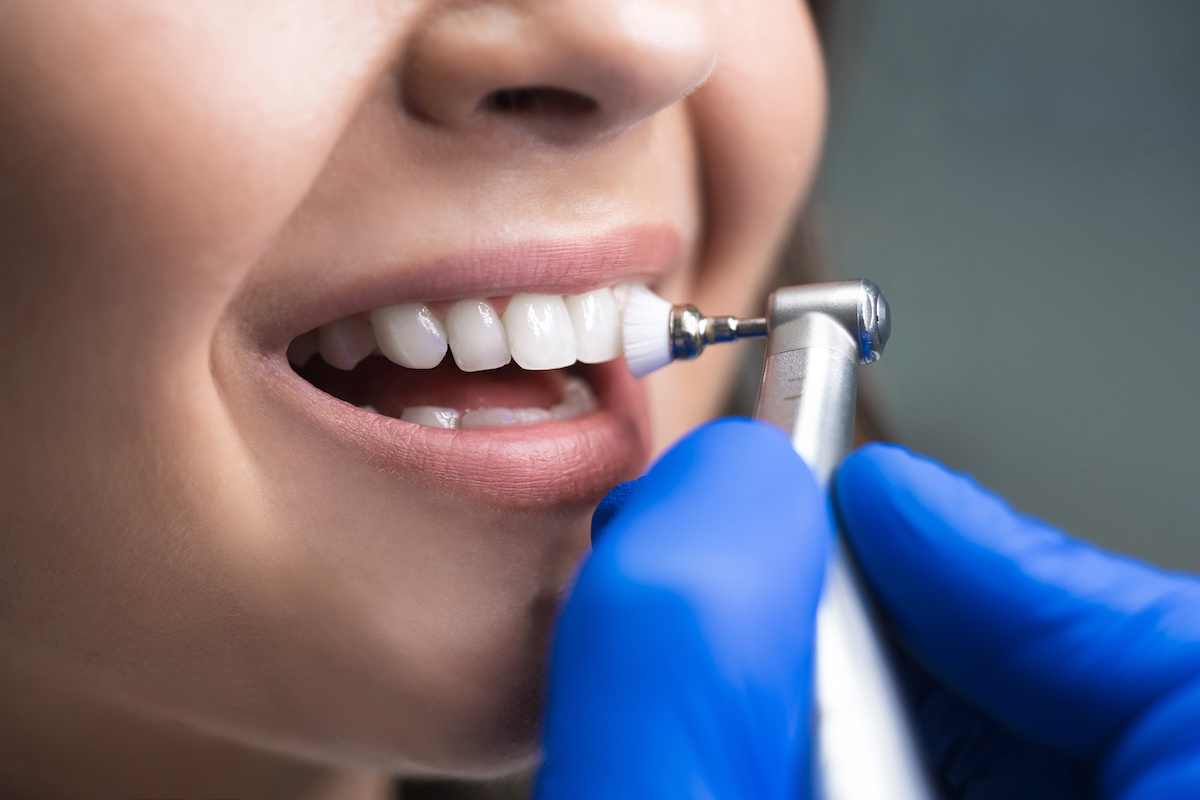
Regular check-ups and cleanings every 3 to 6 months ensure the long-term success of your implant.

Wondering if implants are right for you?
Curious about the cost?
How long does the treatment take?
If you have any concerns, please visit our clinic for a consultation.